
6
Case study
"Shopping" For Care
In some markets, we do not have enough availability for consumers to book appointments. We believe that promoting sooner availability outside the consumer's exact search for basic care needs (low acuity) can help consumers establish care quicker through venues they may not have known about.
Study Overview
In some markets, we do not have enough availability for consumers to book appointments. We believe that promoting sooner availability outside the consumer's exact search for basic care needs (low acuity) can help consumers establish care quicker through venues they may not have known about.
In this study, we wanted to understand consumers' impressions of providing alternate options in their initial search and if they will effectively provide more availability that consumers value while increasing engagement and scheduled appointments across multiple venues "system-wide".
SharePoint Stream
Stream
High-level Findings
- Primary care is becoming a supply and demand issue; consumers understand the value but have serious difficulty obtaining quality primary care and abandon the care for more obtainable options (i.e., Urgent Care, virtual care, etc.).
- Most participants begin their search on their insurance website to get a list of covered providers
- Participants will also furnish a list of provider names based on word of mouth (i.e., Friends/Family or existing health care providers.
- Participants would research the health care facility, its staff, and the provider.
What We Wanted to Understand
- How do consumers search for basic care?
- How do consumers search for care?
- How should we present alternative options for care in line with consumers’ search results?
- What value do consumers place on Primary Care Providers?
Our Observations
Value of a Primary Care Physician (PCP)
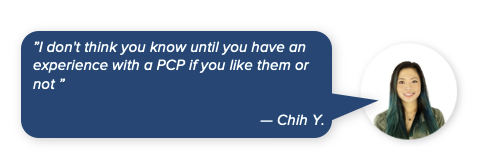
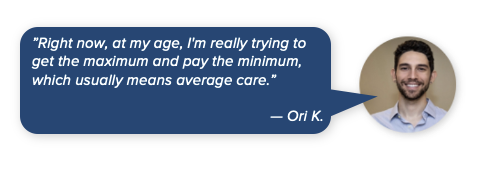
Due to lack of availability, primary care has become a nice-to-have for many consumers. With the numerous alternative immediate options becoming readily available, the value of a PCP seems to be diminishing. Consumers who are generally healthy, with no chronic issues, and have become exhausted by the common hurdles in finding a PCP they trust, often turn to virtual care as it's the only option for immediate health needs.
SharePoint Stream
Stream
Where do consumers start their search?
Many consumers start their search for a doctor on their insurance websites. Consumers find that the insurance website gives them a clear understanding of in-network coverage options and an idea of cost, which is their biggest concern. From there, they will make notes, often using pencil and paper to curate a list of providers to research.
SharePoint Stream
Stream
What do consumers value?
What consumers value when searching for a PCP:
- Insurance/Pricing or Word of mouth
- Distance
- Availability
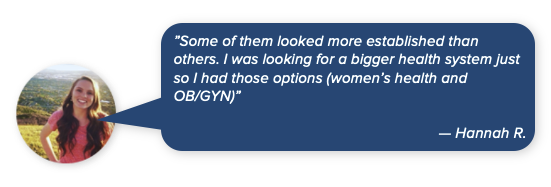
- Ratings and Reviews
- Staff and Facility
- Visit options
- Technology (patient portal and/or mobile app)
Concept Feedback
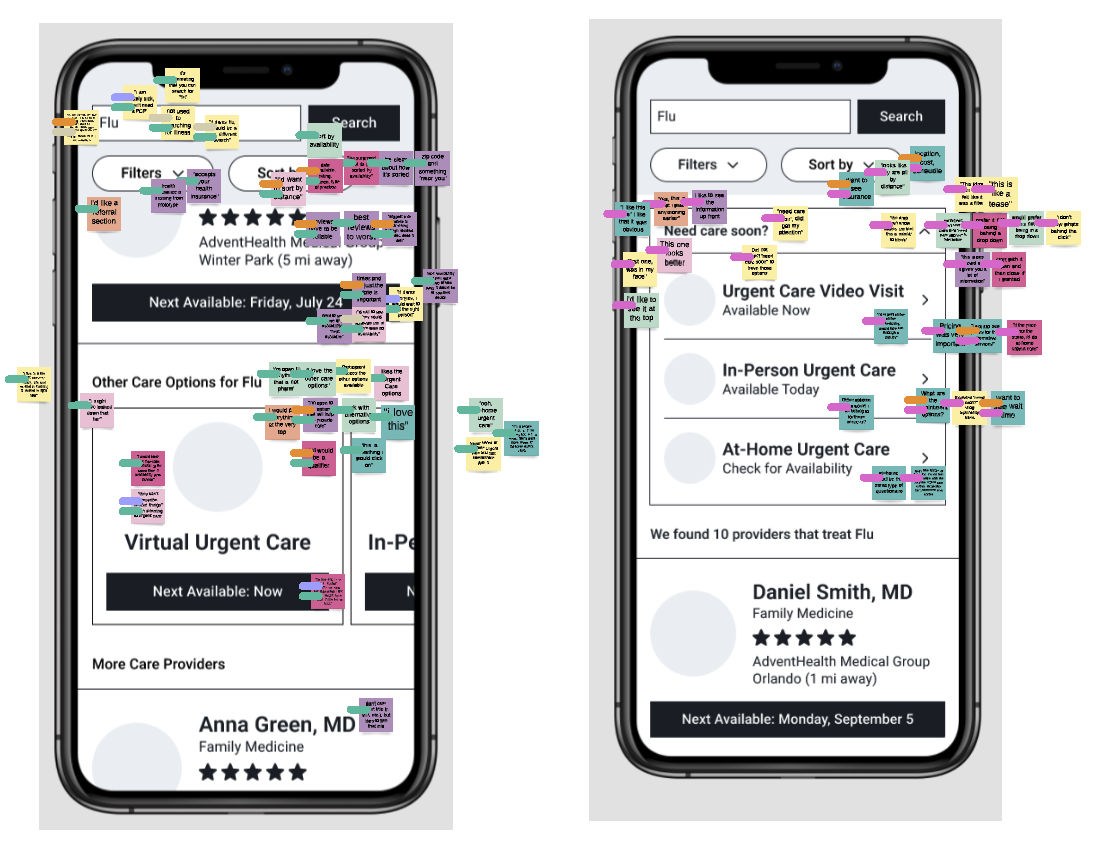
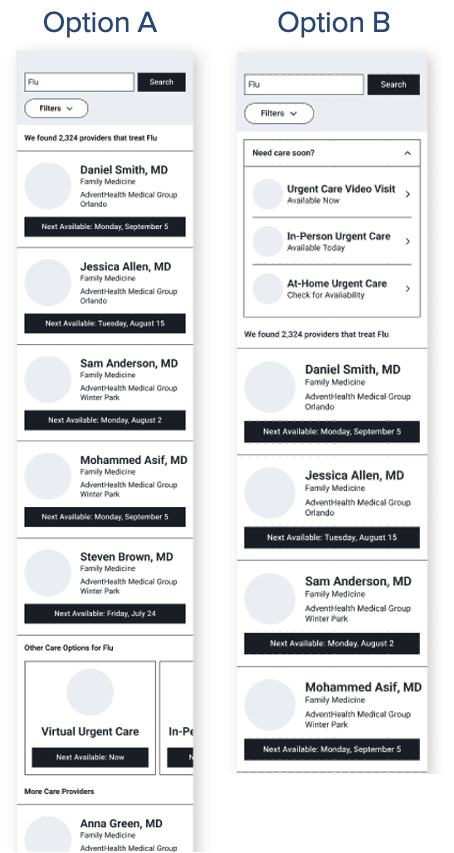
Participants prefer Option B, where the alternative options were presented at the beginning of the list. Although they liked the second option, participants preferred that the list not be hidden behind a drop-down menu and to have the options fully exposed from the beginning. "I need care soon; this got my attention," said Kelly.
Having the options exposed allows the consumers to see upfront what the options are without having to click to reveal. Consumers stated they would be more inclined to continue scrolling through the list of providers as opposed to Option A where they felt the interruption of options forced them to stop and consume different information.
Some found the drop down element to be visually similar to the "filter" and "sort by" elements and felt the options would show availability options (e.g., Today, Tomorow, a week).
SharePoint Stream
Stream
Conclusion
Primary care is becoming unnecessary due to scarce availability and the increase of other immediate care options. Consumers who are healthy and without chronic health concerns still understand the value of primary care, but the value is eclipsed by the exhaustive search needed to find that "perfect PCP", the time it takes to get in the door, and the quality of the care they are receiving. Age was not a factor in this assessment as we observed the same sentiment across all age groups interviewed. Moreso, their current health condition was the driving factor in their decline in perceived value.
When consumers do search for primary care, most begin their search on their insurance website as cost and network availability are their main qualifying factors, followed by distance and availability. Although, distance and availability are a dance of preference. From there, consumers often rely on pen and paper to curate a list of providers to compare and research.
Contact
Want to talk through the Shopping For Care study?
The findings, research choices, or the decisions this work informed — happy to get into any of it.
A good conversation is usually the best start.