
125
Case study
Care Advocacy Automation
In this study, we aimed to find ways to reduce the lift of Care Advocacy (CA) chats by automating most of the tasks that currently require human assistance. By doing so, we hope to increase the accessibility of Assigned Care Advocates to more patients who require their help. The goal is to decrease the workload of human Care Advocates by 75%.
Study Overview
In this study, we aimed to find ways to reduce the lift of Care Advocacy (CA) chats by automating most of the tasks that currently require human assistance. By doing so, we hope to increase the accessibility of Assigned Care Advocates to more patients who require their help. The goal is to decrease the workload of human Care Advocates by 75%.
We wanted to understand the following:
- Consumers understanding of CA program
- Consumers Communication preferences with their CA
- Consumers perceived value of the CA program
- Consumers sentiment towards chatbots
- What services should be automated vs human-touch
Key Findings
- Consumers always interacting with an automated chat assistant when accessing their Care Advocate could cause strong dissatisfaction losing that human touch that is expected.
- 30% of respondents were not aware they were a part of the Care Advocacy initiative.
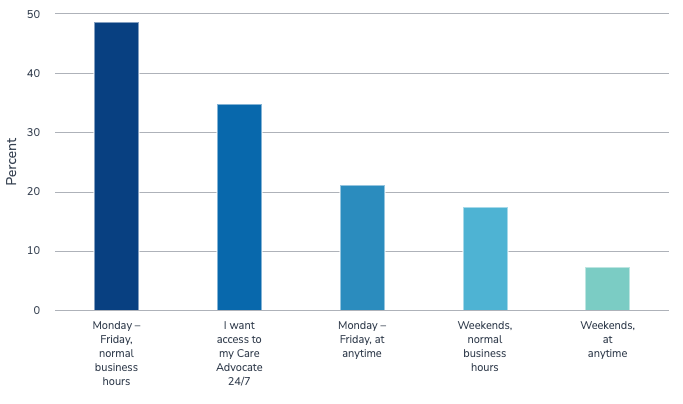
- 35% of respondents wanted 24/7 access to a Care Advocate
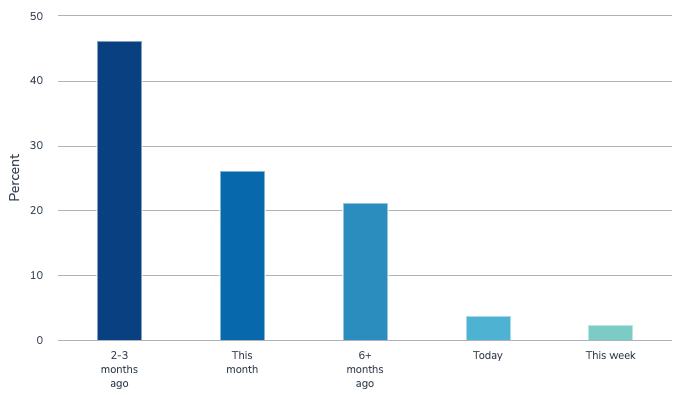
- For half of the respondents, it's been 2-3 months since they interacted with their Care Advocate .
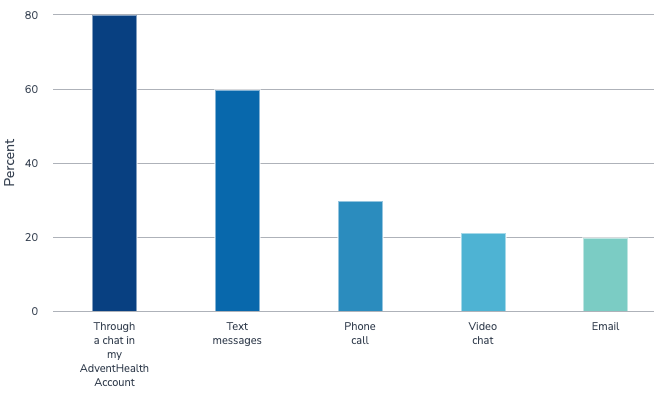
- Chat either through online messaging or SMS was preferred by the majority of respondents.
- Consumers value a CA that knows them" and their medical history. They also feel a CA enables better communication with their providers.
- Respondents feel that a CA isn't always needed , as long as their issues are addressed.
- 84% of respondents used a chatbot as a last resort or after they could not initially achieve their goal.
- Respondents chose only three out of fifteen services to be automated ; all others heavily preferred a human touch citing a more personal experience and an ability to handle complex conversations.
- A more intelligent chat, option to choose between human or automated, and handling basics services are some of the things that we could do to improve their chat experience; however, overall, the majority of respondents stated that there is nothing we can do to improve it.
Communicating with their Care Advocate
35% of respondents expressed a desire for 24/7 access to a Care Advocate. This finding underscores the importance of accessibility and availability in customer service delivery, suggesting a need for expanded service hours to meet consumer expectations.
Secondly, it was revealed that for approximately half of the respondents, it had been 2-3 months since their last interaction with their Care Advocate .
It's someone who knows my needs and who I can access when it's hard to get through to the doctor's office
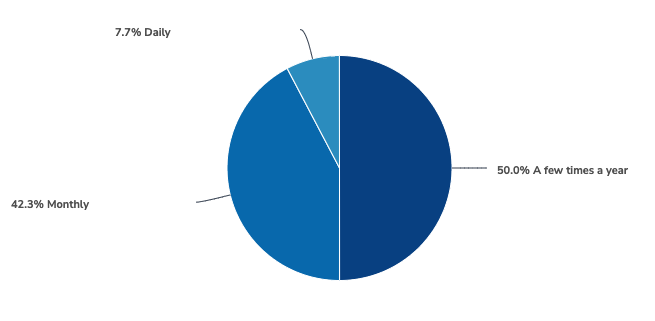
Furthermore, when given the option, the majority of respondents indicated a preference for communicating via online messaging or SMS. This preference underscores the importance of offering diverse communication channels to cater to individual preferences and convenience in interacting with a human Care Advocate.
It is important to ensure that automated chat assistants complement the human element of the current service to effectively address consumer health needs.
It can be anyone as long as they have access to information/ historical chats that can help with resolutions.
Consumers' Perceived Value their Care Advocate
Consumers overwhelmingly expressed the importance of having a Care Advocate directly assigned to them, with over 60% emphasizing this aspect. They value a CA who knows them personally , including their medical history, which fosters better communication regarding their healthcare needs.
Participants highlighted the role of a Care Advocate in streamlining communication with healthcare providers. They perceive the Care Advocate as an intermediary who enables quicker and more effective exchange of information and resolution of their questions .
While consumers acknowledge the value of a CA, they also indicate that their need for one varies. They prioritize issue resolution, suggesting that as long as their concerns are addressed, the presence of a CA may not always be necessary.
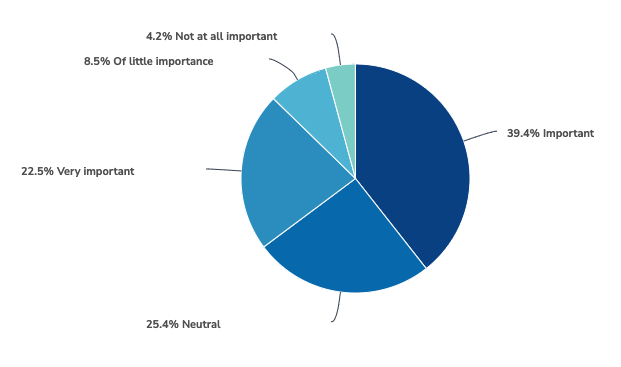
Consumers demonstrate flexibility in their interactions with CAs, indicating a willingness to engage with different individuals rather than requiring a consistent point of contact.
Despite the perceived benefits, consumers recognize that Care Advocates may not be able to address all their needs. Some express uncertainty about the full extent of a Care Advocate's capabilities and how best to utilize the service, indicating opportunities for clearer communication and education regarding available resources.
How could we improve Care Advocacy?
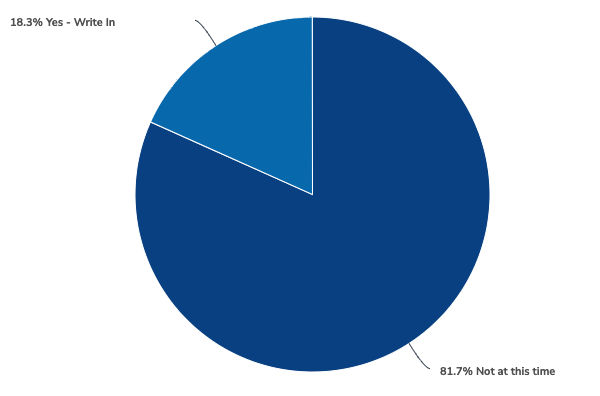
An astounding 80% of respondents stated that there was nothing about their current experience that could be improved. Of those who stated yes, they feel that the following would lead to a better experience:
- Reduce response time
- Clarity of CA responsibilities
- Improve updates on tasks that may take longer to address
- Enable the CA to contact ALL providers assigned to a patient
Consumer Sentiment Towards Chatbots
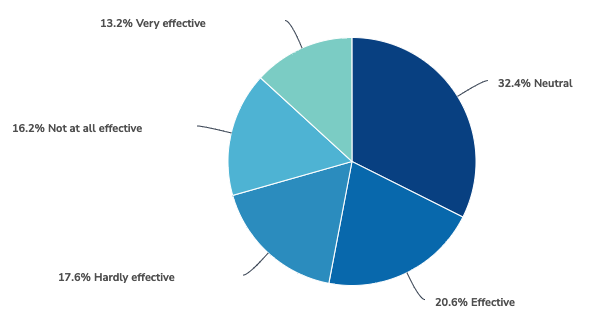
Consumer reactions to the effectiveness of chatbots varied . While some expressed skepticism, others found them to be useful tools. To prevent any negative connotations associated with the term "chatbots," we referred to them as "Automated Chat Assistants" throughout the study.
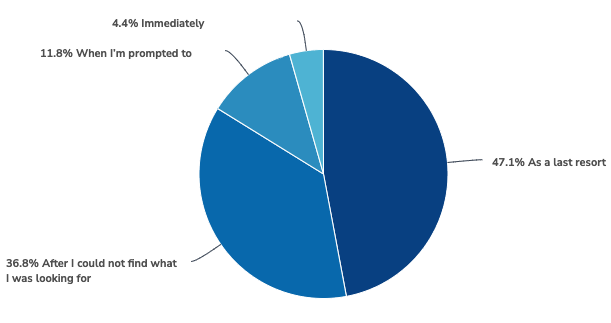
The majority of respondents (84%) reported using a chatbot as a last resort or after initial attempts to achieve their goals independently were unsuccessful.
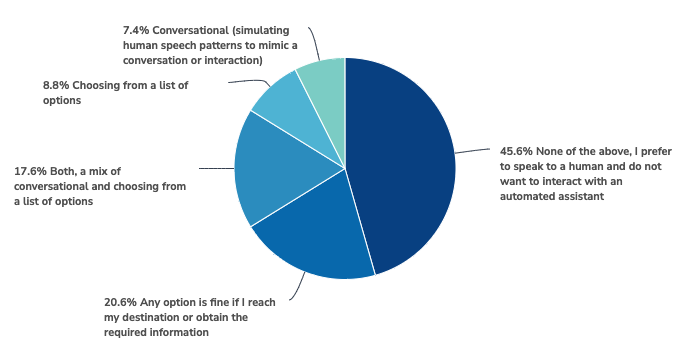
We also wanted to understand consumer preferences regarding the interaction style of automated chat assistants within the Care Advocacy service. Specifically, we explored whether consumers preferred a decision tree-based interaction or a more conversational experience.
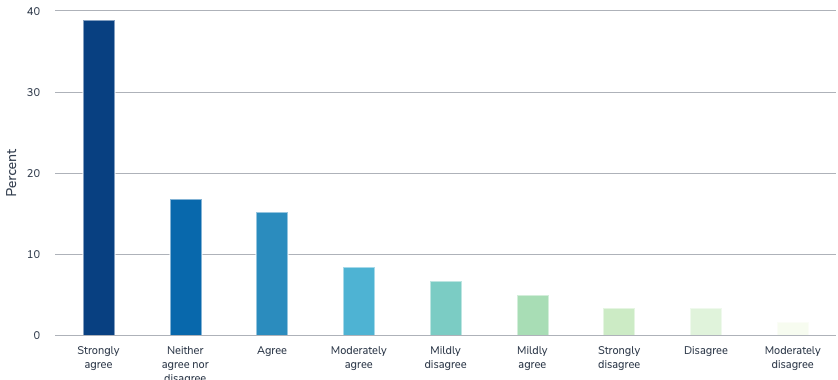
While nearly half (46%) of consumers expressed a preference for speaking exclusively with a human and avoiding chat assistants altogether, approximately 20% were indifferent to the interaction type, as long as they could obtain the necessary information or achieve their goals.
A notable proportion ( 18%) of consumers indicated that a combination of both interaction styles could be beneficial.
How could we improve Chatbots?
Many c onsumers perceive chatbots as inferior to interactions with real people , citing limitations in their usefulness and frustrations with dead ends and a lack of intelligent understanding of deeper consumer issues.
Despite these challenges, there's potential for improvement if we provide consumers with more control and choice. Offering options for consumers to select between human or automated assistance, focusing on handling only easy basic interactions, and enhancing the intelligence of the chatbot service could lead to greater consumer adoption.
While suggestions for improvement such as providing a more intelligent chat, offering choice between human and automated assistance, and focusing on basic services show promise, it's important to note that the majority of respondents expressed skepticism about the potential for significant improvement in the chatbot experience , stating that there may be "nothing" that can be done to enhance it.
I feel like I need to learn to speak the technical language of the chat assistant, which is a very frustrating experience. Human interaction is always quicker for me.
What services should be automated vs human-touch?
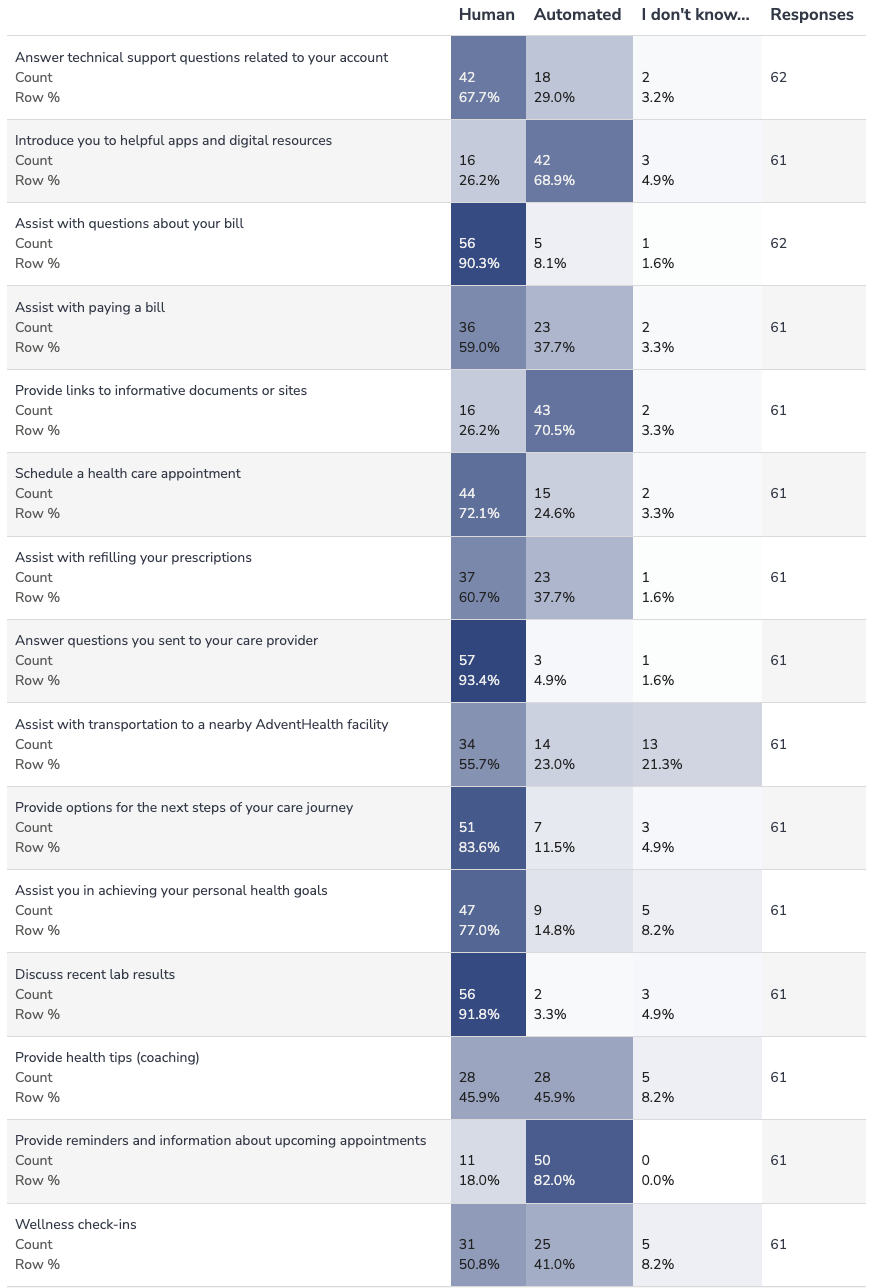
Participants were asked to categorize common services currently handled by Care Advocates into two groups: "Human" for services they prefer to be handled by a person, and "Automated" for those they feel could be managed automatically without human interaction.
The majority of respondents chose only 3/15 services to be automated, indicating a strong preference for human interaction across most tasks. They cited a desire for a more personal experience and highlighted humans' ability to handle complex conversations as reasons for this preference.
Participants expressed that tasks requiring a human touch are often those involving intricate nuances of human speech . They believe humans possess better adaptability and are more adept at providing personalized responses, which can lead to quicker resolutions to consumer queries.
Conversely, routine tasks or those not requiring deep understanding were seen as more suitable for automation. Consumers indicated a higher likelihood of accepting automated interactions for these types of inquiries, as they are perceived to be less complex and more easily handled by automated systems.
A human is always going to be better and more accurate than an insentient robot that doesn't know me nor understand my individual needs and circumstances.
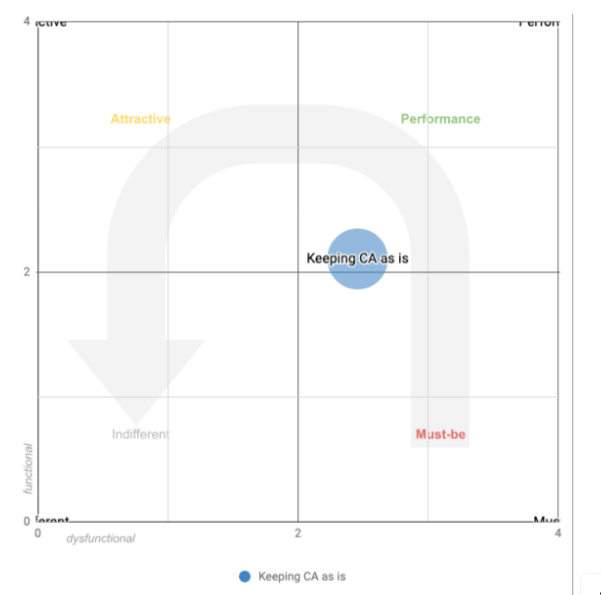
To understand how consumers would accept an experience where their interactions would always involve interacting with a chatbot, we used the Kano model which classifies consumer preferences regarding services into 5 categories.
Our current offering of Care Advocacy aligns with what is known as the "Performance" or "one-dimensional attribute" category. These attributes exhibit a linear relationship with consumer satisfaction, where meeting consumer expectations is crucial for satisfaction. An example of this type of attribute is the resolution of a smartphone's camera.
However, our findings suggest that if consumers were to consistently interact with an automated chat assistant when accessing their Care Advocate , it would fall into the "Reversed" category. This category comprises unwanted features that decrease consumer satisfaction when present. Strong dissatisfaction was expressed due to the perceived loss of the "human touch" that consumers expect in their interactions.
Because a human can understand my needs and wants faster than having to select from multiple choices that don't always match up to my needs.
Conclusion
In conclusion, our foundational study has provided valuable insights into the complexities of integrating automated chat assistants into the Care Advocacy initiative. One of the standout findings is the significant importance consumers place on maintaining a "human touch" in their interactions. The reliance solely on automated chat assistants was associated with strong dissatisfaction among participants, underlining the essential role of human empathy and understanding in Care Advocacy interactions. The insights in this report emphasize the significance of retaining the human touch in Care Advocacy interactions to uphold current consumer satisfaction. Although automation can provide efficiency and convenience, it must be implemented mindfully to prevent diluting the personalized experience that our consumers value. Going forward, it is crucial to maintain a balance between automation and human interaction by prioritizing accessibility, personalization, and transparency, to guarantee a seamless and satisfactory experience.
Contact
Want to talk through the Care Advocacy Automation study?
The findings, research choices, or the decisions this work informed — happy to get into any of it.
A good conversation is usually the best start.